

The French in Malta
June 10, 1798 – September 5, 1800
On June 8 1798, the Maltese islands were surrounded by the French fleet that carried some 40,000 troops. On June 9 Bonaparte arrived on board the l’Orient. He then sent a message to Grand Master Ferdinand von Hompesch wherein he demanded that his ships would be allowed to enter Grand Harbour, on the pretext to bunker water. In truth, Bonaparte was intent in taking over Malta and expel the Order of St John from the Maltese islands. Grand Master Ferdinand von Hompesch at first politely declined the request but then he eventually agreed as June 10 French troops landed on Malta’s shores and seized key positions including those on Gozo. Then on June 12, at 4pm., Napoleon landed at Lascaris Wharf, Valletta to take over the governship of Malta. By June 18, Grand Master Ferdinand von Hompesch and a small retinue of knights loyal to him, was on his way to Trieste.

During his seven day stay in Malta, Napoleon dictated new laws that were meant to establish a republican style of government. These laws were totally alien to the Maltese and most of them affected adversely the commercial interests of those in commerc. Moreover, some of the laws offended the religious sentiments of the Maltese.
Thus, discontent was rife and it took less than three months for the Maltese to rebel against their new masters. On August 28, news reached Malta of the defeat of Napoleon at the maritime battle at Aboukir earlier that month. Such news may have had some bearing as to why the Maltese revolted on September 2 against the French. In response for this rebellion, the French locked themselves behind the fortification walls of the two main harbours. Thus began the Maltese blockade against the French that continued throughout the following 24 months.
Below is a timeline of some of the events that occurred during the blockade. Also mentioned are other events that occurred outside Malta but which were relevant to the destiny of both the French within s and the Maltese outside the towns.
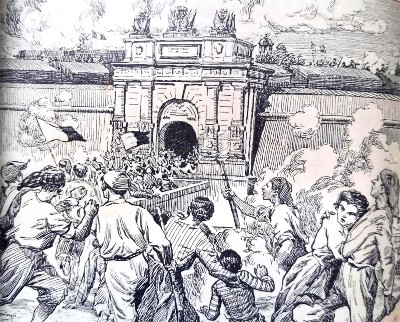
A timeline of the blockade
2nd September 1798 In Rabat the Maltese attack the French – 63 French troops billetted in Mdina suffer the brunt of an angry mob, thus starting the rebellion.
3rd September 1798 Emanuele Vitale is chosen as the leader / commandant (photo below)) of the Maltese in their quest to oust the French from Valletta and the three towns of Birgu, Senglea, Cospicua, Gozo and other fortifications.
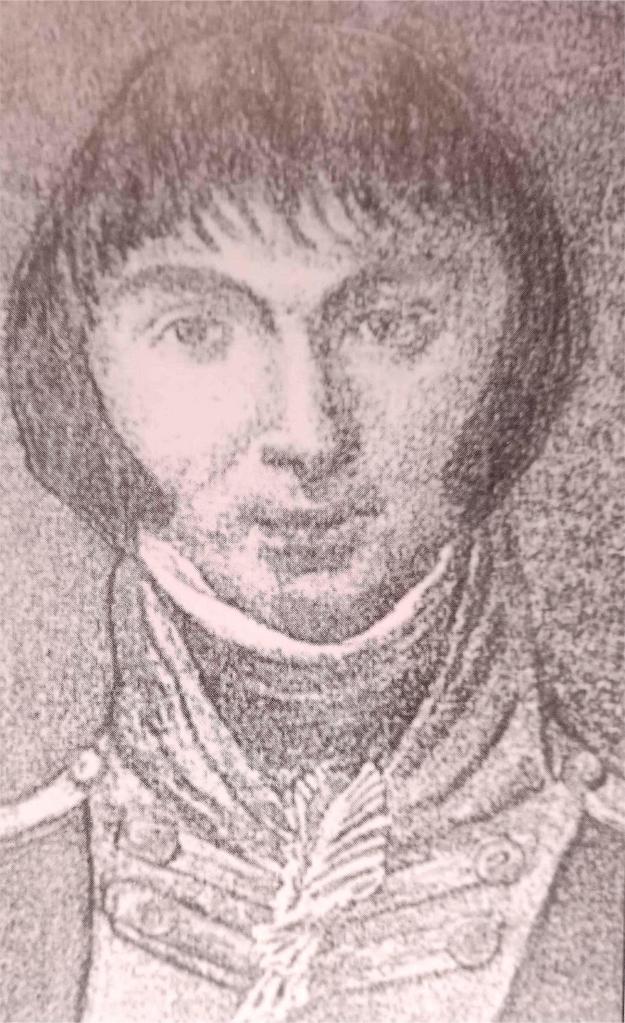
3rd September 1798 The French disband the Maltese National Guard that had been set up by the Order of St John. Those who still retain any weapons are to return them to the Artillery Office or else to the Palace. The officers of the Cacciatori Maltesi regiment are to do the same and refrain from wearing their uniform.
3rd September 1798 250 French troops march out of Port de Bombes and head to Mdina in aid of their compatriots within that town. When reaching Fleur de Lys, armed men from Birkirkara confront them. Some French soldiers are killed and the rest retreat back to Valletta.
4th September 1798 A national assembly is set up for the purpose of leading the Maltese in their efforts to blockade the French and to defend the rest of the island.
4th September 1798 The French inside Valletta arrest a Dominican monk who is suspected of having abetted the Maltese insurgents. He is executed by a firing squad in Piazza San Ġorġ / Place de la Liberté (Palace Square) on the same day.
5th September 1798 Insurgents from the southern villages of Malta, mostly from Żejtun Għaxaq and Żurrieq, attack the Cottonera fortifications but fail in their attempt. Then, the same troops divert their attention to St Thomas Tower in Marsascala and this time they are able to take over the fort.
7th September 1798 General Claude-Henri Belgrand de Vaubois (photo below) formally declares a state of siege. This proclamation is sent to the Government Commission, to the two municipalities of Valletta and to the three towns within the Cottonera Lines.
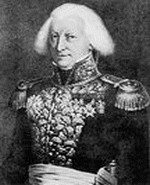
12th September 1798 A small contingent from Fort Manoel in Marsamxett makes a sortie to attack the Tal-Għargħar camp, set up by Vincenzo Borg (Brared). The attack fails miserably and the French scurry back to Fort Manoel.
13th September 1798 From on board the Vanguard, Rear Admiral Lord Horatio Nelson requests the aid of the Portuguese fleet to sail to Malta to initiate a maritime blockade of the French in Malta.
16th September 1798 The French garrison inside Fort Chambray – some 60 soldiers in all – abandon the fort and flee to Malta to join their compatriots in Valletta.
18th September 1978 The Gozitan priest Dun Saver Cassar is chosen as the leader of the ‘provisional government’ of Gozo.
19th September 1798 A Portuguese naval squadron headed by Marquis de Niza Reale made up of six ships arrives off Malta to commence a blockade so that no provisions or troops would be allowed to enter harbour in aid of the besieged French. Borg and Vitale board a boat to meet the Portuguese commandant.
24th September 1798 A British Squadron returning from Aboukir in Egypt after the Battle of the Nile on its way to Naples, stops off Malta and supplies the Maltese with 1,000 muskets.
26th September 1798 Adult males are being ordered to leave the harbour towns to go and live in the villages. This order is intended to lessen the risk of an uprising by the Maltese within the fortified walls and to diminish the number of mouths to feed inside the fortified towns.
30th September 1798 The British admiral Sir Thomas Troubridge arrived in Malta to blockade the French from the sea.
2th October 1798 Some 500 persons are permitted to leave the towns inside the fortifications for the same reason as before.
5th October 1798 In the early morning hours, the French troops make a sortie from the Cottonera fortifications to attack and plunder the nearby village of Żabbar. However, the inhabitants somehow are aware of the French plans and so they ambush the French who are quickly forced back, carrying back with them many injured while leaving behind those killed.

6th October 1798 The Għargħar military camp is completed and fully operational, defended by 5 cannon. These are aimed towards Fort Manoel. The Guillaume Tell is also in the line of fire and thus is forced to abandon its anchorage in Marsamxett and is taken to safety inside the Grand Harbour.

6th October 1789 General Vaubois writes to the French Directorate informing it that his troops now lack cannon balls and lead to turn into bullets.
18th October 1798 The Maltese militia is supplied with 2,000 muskets by the British.
24th October 1798 Another 900 inhabitants are forced to leave the fortified towns to go and live in the country villages.
24th October 1798 Rear Admiral Horatio Nelson (photo below) arrives in Malta on board the Vanguard leading a squadron of 4 ships.
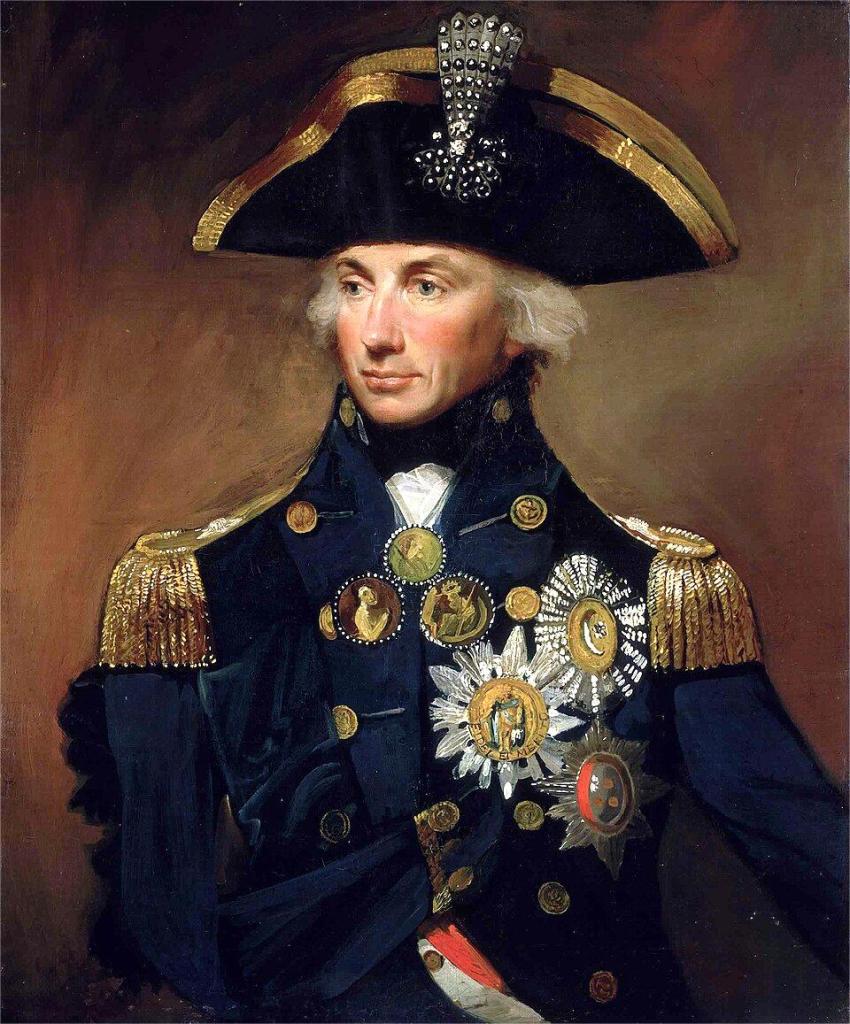
25th October 1798 On arrival of the British squadron the Portuguese leave Malta and head to Naples to carry out much needed repairs on their vessels.
27th October 1798 The French troops – 217 in all – locked inside the Citadel in Rabat capitulate. On the morrow, once the French sign their cessation, the troops are taken on board the Vanguard and the Minotaur to be retained as captives.
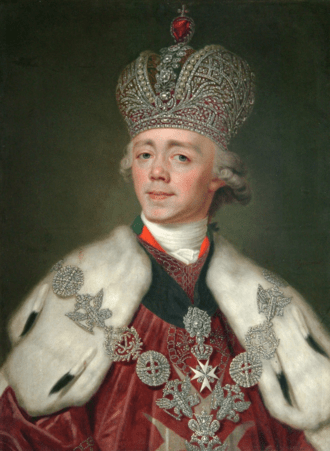
27th October 1798 A number of knights of the Order of St John appoint Czar Paul I of Russia as their new grand master in lieu of Ferdinand von Hompesch who is now living in Trieste.
28th October 1798 Captain John Creswell the officer in charge of the British marines hoists the British flag on top of the Citadel. This flag is removed the following day and the flag of the King of Naples is hoisted instead. This in order not to hurt the sentiments of the King of Naples and Sicily who still claims rightful possession of the Maltese islands.
31st October 1798 Nelson leaves Malta for Naples while Captain Alexander Ball on board the Alexander takes over the responsibility for the blockade of Malta from the sea.
… October 1798 Throughout the last two weeks of October the French from behind the fortifications fire unceasingly and ferociously at the Maltese military camps of Tas-Samra and that of Kordin.
7th November 1798 Czar Paul I (photo below) is officially elected as the new grand master of the Order of St John.
15th November 1798 Ferdinand, King of the Two Sicilies declares his intention to assist the Maltese in their pursuit to oust the French.
17th November 1798 Due to the scarcity of food in Valletta, Vaubois orders that all the beggars in the harbour towns are to be evicted and sent outside the town walls. It is being reported that up to the end of November some 10,000 people in all have been deported to counter the scarcity of food.
24th November 1798 Ferdinand, King of the Two Sicilies declares war against France.
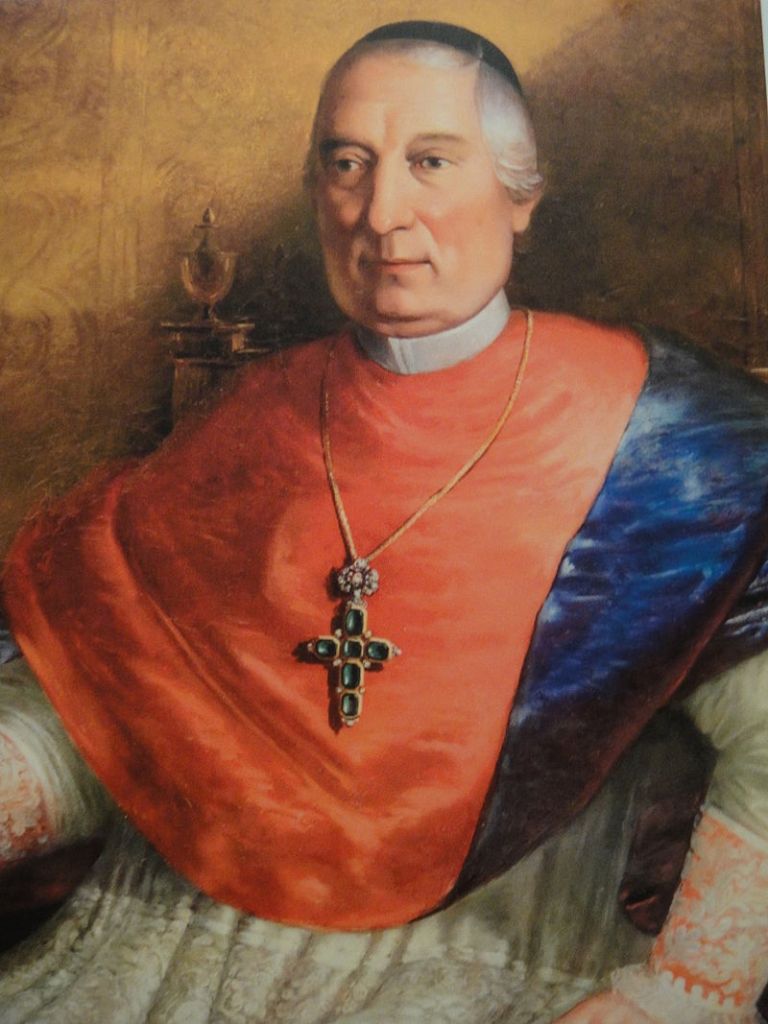
25th November 1798 Lord Nelson’s squdaron reaches Malta. Canon Saverio Caruana (photo below), Marquis De Piro, Count Manduca and Theuma Castelletti embark on a boat to board the Vanguard to welcome Lord Nelson. The latter is taken aback when informed by the Maltese that, notwithstanding King Ferdinand’s promise to support them, they as yet have received very little aid.
6th December 1798 Two Neapolitan frigates reach Malta to enforce the blockade. These provided the Maltese with 70 muskets and ammunition.
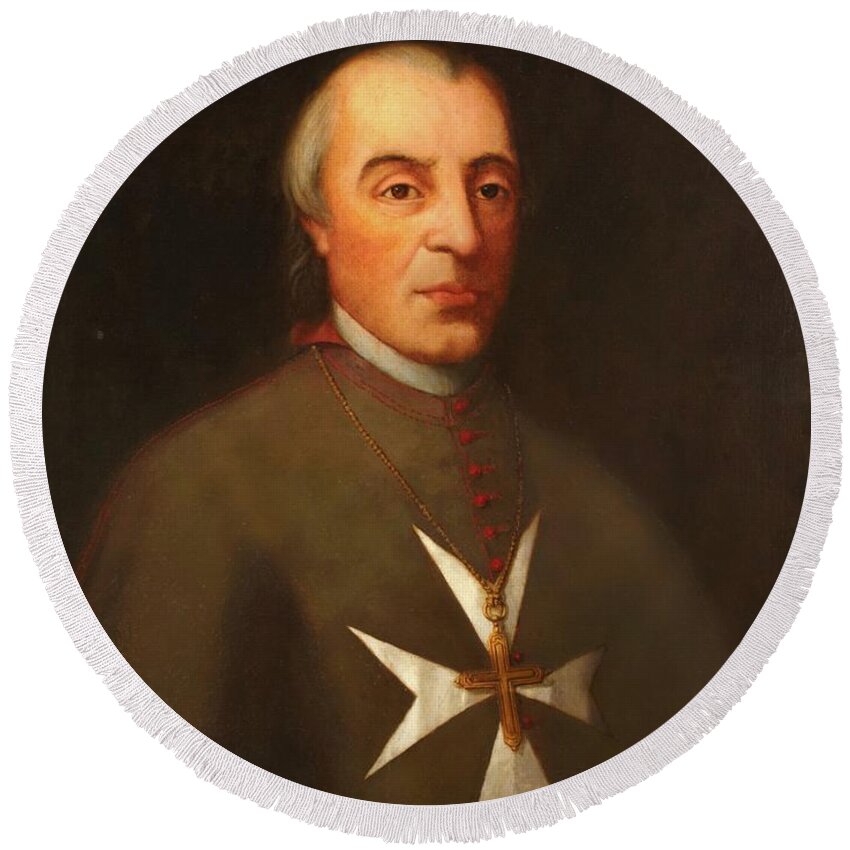
8th December 1798 Feast of the Assumption. Mass is held by Bishop Labini (photo below) in St John’s Church and members of the French Government Commission (the governing body of Malta) attend. At 2pm. the same members of the Commission attend the celebrations of the Immaculate Conception in Bormla. Similarly, on December 25, the same members attended Christmas mass at St. John’s church.
8th December 1798 The Tal-Borg battery, close to Paola, bombards the harbour towns as from 10.30 pm. until midnight.
14th – 21st December 1798 The Maltese militia keeps on firing at the fortifications of the Cottonera. Much damage is caused to the residential buildings.
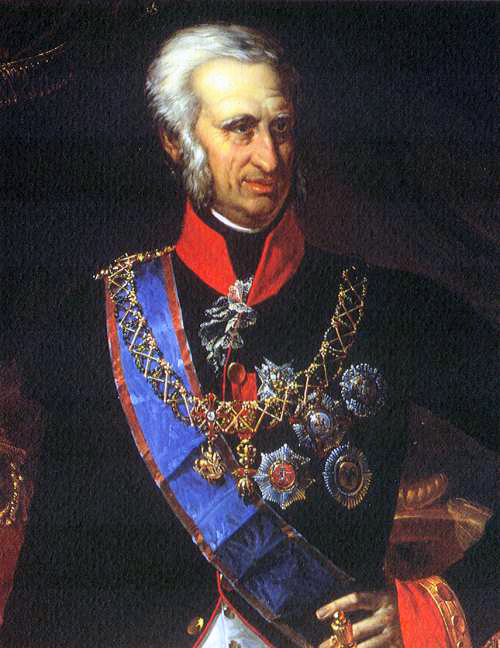
21st December 1798 King Ferdinand (photo below) flees to Sicily in order to escape the French troops that are closing in on Naples.
8th January 1799 Vaubois orders the sale of all jewellery deposited at the Monte di Pietà in order to collect funds required, to sustain the war effort and pay the 4,000 soldiers that are in their employment.
9th January 1799 Works on the trenches in the area known as Corradino (Kordin) Heights are completed.
11th January 1799 The plot hatched by Guglielmo Lorenzi and Dun Mikiel Xerri (photo below) and others to overwhelm the guards in charge of the Marsamxett Gate, to allow the Maltese militia into Valletta, is uncovered on the eve of its execution. Forty nine Maltese men are arrested and suffer death by a firing squad in Piazza San Giorgio (Palace Square).
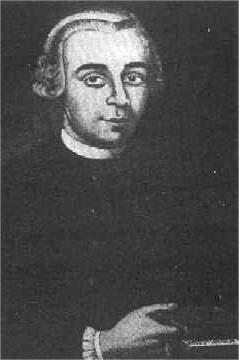
15th January 1799 Guglielmo Lorenzi, the ringleader of the failed plot is sentenced to death and is executed by a firing squad in Palace Square.
17th January 1799 Dun Mikiel Xerri, second in command in the plot is executed by a firing squad.
January / February 1799 The rest of the 49 persons most of them from the Birkirkara battalion similarly executed over the next few weeks.
21st January 1799 The French administration in Malta the commemorates the death by guillotine of King Louis XVI. A ceremony is held in front of the Palace with the attendance of members of the Maltese Government Commission and the participation of the French troops. In his speech, Vaubois states his intention to resist the blockade, ‘Either we win or we die!’
26th January 1799 Lord Nelson meets with the Maltese militia leaders on board the Vanguard.
29th January 1799 Mattew Pulis, another ringleader of the failed coup is executed by a firing squad in Palace Square.
During February 1799 Vincenzo Borg (photo below), leader of the Birkirkara battalion sets up another battery at Dragonara Point. The Maltese start to feel the severe famine as the supply of grains is fast depleting.

1st February 1799 A meeting is held at the chapel of San Pawl Milqgħi, Burmarrad, between Captain Alexander Ball and the Maltese leaders. There they discuss the present situation and the way forward to overcome the French.
9th February 1799 Vincenzo Borg, hoists the British flag alongside that of the King of Naples and Sicily, at Tal-Għargħar military camp. Then he loans the flag to the Tas-Samra and the Tal-Borg military camps for them to do the same. Borg is very much in favour of welcoming the British as the future governing protectors of Malta.
11th February 1799 A meeting of the National Assembly is held at Emanuele Vitale’s house in Rabat. Alexander Ball (photo below) is elected president of the assembly (now to be called the Congresso Nazionale).
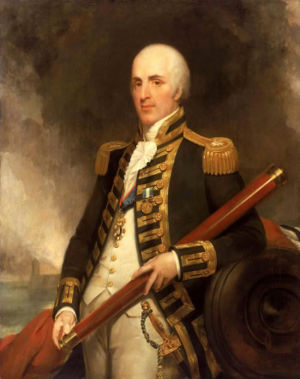
15th February 1798 The Maltese insurgents carry out an attack on Bormla using boats that are made available in Marsa. The intention is to cross the Grand Harbour to Għajn Dwieli and overwhelm the guards at St Paul’s Gate. The attempt fails.
19th February 1799 The King of Naples concedes permission to his Maltese ‘subjects’ to take all necessary orders from Lord Nelson.
… April 1799 The Czar’s troops are in Naples waiting for orders to sail to Malta. On April 11, the Maltese send a letter to Lord Horatio Nelson stating unequivocally that the Maltese prefer to remain under British protection rather than a Russian one. A memorandum is also sent to the Czar Paul 1 to the same effect.
21st May 1799 All British ships enforcing the blockade suddenly vanish from Maltese waters as these hurry towards Minorca in aid of Lord Admiral St Vincent who was then Commander-in-Chief of the British fleet in the Mediterranean. This allows the French to take over command of the sea around Malta and thus are able to capture sea vessels with much needed provisions to be diverted to the French troops.
6th July 1799 Grand Master Ferdinand von Hompesch formally resigns his granmastership.
9th September 1799 Brigadier-General Thomas Graham arrives in Malta leading 800 British troops. Graham sets up his headquarters in Palazzo D’Aurel in Gudia.
… November 1799 Some 1,000 Neapolitan troops land in Malta.
10th December 1799 900 Irish troops land in Malta.
17th November 1799 A French squadron carrying some 4,000 troops reaches Malta to aid the French in Valletta. These are engaged in battle by Alexander Ball’s squadron. Two French ships and a corvette are captured by the British. The others manage to escape and hurried off back to France.
30th March 1800 The Guillaume Tell, which had found protection inside the Grand Harbour for more than 18th months sets sail to France. However, she was soon spotted by the British squadron off the coast of Malta and a battle ensued. Demasted, she was captured and was towed to Syracuse.
4th May 1800 Lord Nelson, accompanied by the British ambassador to Naples, Sir William Hamilton and his wife Lady Hamilton, arrive in Malta. A few days later some 900 Neapolitan troops land on Malta’s shores.
… June and July 1800 Some 1,150 British troops headed by Major General Henry Pigot arrive in Malta. Pigot takes overall command from General Thomas Graham.
… August Commandant Jean Baptiste Bosredon de Ransijat (once the Treasurer of the Order of St John) the President of the Commission of Government writes that in Valletta and the harbour towns, the food situation has become desperate. For months now, mules, horses, dogs, cats and rats are being slaughtered to feed the French troops.
24th August 1800 Seeing that the end was near, Vaubois authorises the ships Diane and the Justice both sheltered inside the Grand Harbour, to sail to France. The Diane is captured by the British while the Justice manages to elude the British squadron.
5th September 1800 General Vaubois concedes defeat. The capitulation is signed between the French and the British. The Maltese militia leaders are completely left out of this treaty.
Martin Morana ©
15th April 2025
Bibliography
Boffa Charles J., The Saga of the French Occupation of Malta 1798 – 1800. Progress Press Company Ltd. 1998.
Ellul Grazio, ‘The Irish and 19th century British Malta – rethinking of perceptions’, The Times of Malta, April 10, 2016.
Frendo Henry, Malta 1798 – 1998 (parts 1,2,3) The Sunday Times of Malta, June 7, 14, 21, 1998.
Galea Michael, Sir Alexander Ball and Malta. Publishers Enterprises Group (PEG). 1990.
Mifsud Alfredo, Sovranità Inglese su Malta. Tipografia del Malta, Valletta. 1907.
Sammut Frans, Bonaparti f’Malta. Sensiela Kotba Soċjalisti. 1997.
Schiavone Michael, J. Dictionary of Maltese Biographies. PIN Publikazzjoni Indipendenza, 2009.
Spiteri Stephen, ‘Maltese Siege Batteries of the Blockade (1798 – 1800)’. Treasures of Malta, No. 41, Easter 2008, Vol XIV No. 2. Fondazzjoni Patrimonju Malti.
Testa Carmelo, Maż-Żewġ Naħat tas-Swar. Klabb Kotba Maltin. 1980.
Testa Carmelo, The French in Malta 1798 – 1800. 1997.
Xuereb Charles, France in the Maltese Collective Memory. Malta University Press. 2014.
Xuereb Charles, ‘Bishop Vincenzo Labini, the tactful, zealous ecclesiastic (1780 – 1808)’. Times of Malta. April 24, 2022.
Zerafa Thomas, ‘Dawn of a New Era’. The Times of Malta. January 5, 2014.
More articles about Maltese history and culture as well as other publications …. pleases click here:
 kliemustorja