

Governship of Malta
under Lieutenant General Frederick Cavendish Ponsonby
(1827 – 1835)
Introduction
Sir Frederick Cavendish Ponsonby, an English major-general in the British army and an aristocrat, had fought in numerous battles, including that of Waterloo, where he was seriously wounded. Following the death of Governor Lord Viscount Hastings in November 1826, he was appointed Lieutenant Governor of Malta on February 15, 1827. This post was lower in rank than that held by his predecessors, as both Thomas Maitland and Lord Hastings had enjoyed the title of Governor of Malta. The post given to Ponsonby carried a lower salary, €4,000 instead of the €5,000 earned by the previous governors. It is clear that Ponsonby’s appointment marked a shift in how the British government viewed the administration of Malta, suggesting a more frugal approach to colonial governance. (A.E. Abela, 1995; A. Laferla, 1976).
As with previous administrations, Ponsonby endeavoured to govern the Maltese islands first and foremost in a way that safeguarded Britain’s military and geopolitical interests both in Malta, the Mediterranean and beyond. Yet, Ponsonby also ruled with empathy towards the Maltese people at large as we shall see later on. As did the previous administrators, Ponsonby exercised the best of diplomatic courtesy with the bishop of Malta, given that the latter held sway over the loyalty of the Maltese.
Church – State relations
While a diplomatic approach with the Church was maintained throughout his tenure, certain underlying discords existed which needed to be resolved. At the core of these conflicting issues were the privilegium fori, and the ‘right of sanctuary in ecclesiastical property’. Another serious issue was the Maltese Church’s adhesion to the diocese of Palermo and the King of the two Sicilies.
Already, in June 1822, Governor Thomas Maitland had taken action to prevent Church institutions from acquiring private landed property. To curb the Church’s growing real estate holdings, which were often intermittently bequeathed by the faithful on their death bed, Maitland introduced the mortmain law. This measure was a direct attempt to limit the Church’s accumulation of land and its power, which rivalled that of the State.
The privilegium fori exempted the local clergy from the jurisdiction of state courts, whether they were serving as a defendant or a witness. Instead, they had the right to be tried by a Church tribunal (A. Laferla, 1976).

An enduring issue was the Church’s long-standing ‘Right of Sanctuary,’ which prevented state authorities from entering any of its properties—be they churches, chapels, or convents—to arrest individuals suspected of or accused of a crime. This issue, along with the privilegium fori, was resolved after extensive diplomatic discussions between the Secretary of Government, Frederick Hankey, and the Vatican.

The British government eventually received the papal approval needed to completely abolish both privileges. On April 10, 1828, Governor Ponsonby issued two proclamations stating that neither the right of sanctuary nor the privilegium fori were applicable any longer. However, the latter clause still exempted the bishop of Malta—as well as the governor—from being taken to court (A. Laferla, 1976).
A third issue was the long-standing adherence and subordination of the Maltese diocese to the diocese of Palermo. When Bishop Mattei died on July 14, 1829, Lieutenant Governor Ponsonby took matters into his own hands to ensure that the next bishop appointed would no longer require the approval of the Bishop of Palermo and the King of the Two Sicilies. Ponsonby ignored the Neapolitan King’s prerogative and took the liberty of recommending Monsignor Francesco Saverio Caruana, who had proven himself a formidable leader of the Maltese during the French Blockade of 1800.
With the consent of the Holy See and much to the ire of the Neapolitan King, Caruana was appointed bishop of the Maltese islands on January 5, 1831. Also by papal approval, the Maltese diocese severed its ties with the Metropolitan diocese of Palermo on June 20, 1831.
Political unrest
Meanwhile, other political matters were simmering. The autocratic administration was not to the liking of well-meaning members of the local intelligentsia, who were becoming more and more vocal in their criticism of how local affairs concerning the Maltese population were being run.
In 1832, the Comitato Generale Maltese was established, led by Giorgio Mitrovich and Camillo Sciberras, two prominent figures in the Maltese poltical scene. This committee presented a ‘memorial’ demanding significant political reforms in the legal system, representation in government, freedom of the press, and better educational opportunities for the masses. Mitrovich even travelled to London in 1835, where he gained the support of some members of the British Parliament for the Maltese cause
Following these appeals, on April 1, 1835, King William IV granted the Maltese people a ‘Council of Seven.’ The council was created to ‘advise and assist’ the Governor of Malta on local matters, and the Governor officially proclaimed its establishment on May 1 (Fabian Mangion, 2015; Ch. Xuereb, 2022).
In 1835 a ‘Council of Seven’ was formed, composed of both ex officio and unofficial members. The official members were the Lieutenant Governor; the Chief Secretary of Government, Sir Frederick Hankey; and the Chief Justice, Sir John Stoddart. The remaining members were Bishop Caruana, two prominent Maltese landowners, and a prominent British merchant whose presence in Malta was of not less than two years. Bishop Caruana eventually declined the offer due to a conflict of interest (A. Laferla, 1976).
The scope of the Council of Seven fell short of the aspirations of Mitrovich and Sciberras. They had advocated for the establishment of an elected Maltese committee with genuine legislative authority, as well as for the freedom of the press. This latter issue was eventually resolved in 1839, as a result of the reccommendations of the Royal Commission sent to Malta in 1836.
The economic situation
Since the outbreak of the great plague in 1813, Malta’s economy had been in decline. The economy was based solely on agriculture, particularly the production and export of cotton, which was a struggling industry. This was because Spain had closed all cotton imports in 1800, and the British were opting for cheaper cotton from Egypt.
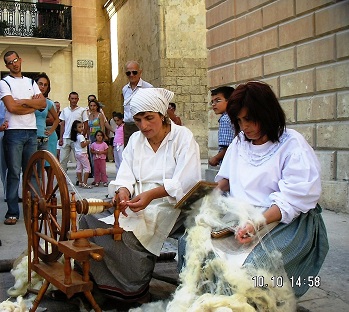
Nevertheless, thousands of Maltese, accounting for about a quarter of all workers, were employed as weavers and spinners in the production of this cash crop. They laboured for around 12 hours a day for very low wages. A few thousand others were employed in ancillary work related to the British naval and military presence in Malta, while thousands were unemployed. Approximately 2,500 people, including many children, were professional street beggars (Ch. A. Price, 1989).
Shipping traffic in Malta’s harbours saw a sharp decline, from around 3,000 ships entering in 1812 to only 1,000 in 1826. This had a profound effect on the business in and around the Grand Harbour, which was home to some 45% of Malta’s population and employed around 4,000 people.
Britain’s spending to sustain its presence in Malta was approximately £100,000, with about 15 percent allocated to charitable institutions and another 30 percent to direct alms for the poor. However, no new infrastructural projects were initiated to employ the masses of unemployed. Proposals for emigration were put forward, with Cephalonia, Australia, and the West Indies topping as viable destinations. For various reasons, though, the plans for large-scale, state-sponsored emigration were discontinued. Nevertheless, some individuals did emigrate independently to other countries, such as Egypt and Algeria (Ch. A. Price, 1989).
The Greek War of Indepence had disrupted sea traffic towards and from the Eastern Mediterranean. A brief respite from the dismal economic situation occurred following the Battle of Navarino (in Greece) in late October 1827, when numerous British, Russian, and French naval ships sailed to Malta for servicing and repairs. This provided a significant burst of economic activity, especially around the Grand Harbour.
Law and Order and the Prisons
Based on a proclamation dated July 18, 1931, Malta had three prisons. The Castellania in Merchants Street (today this building houses the Ministry for Health) held prisoners awaiting trial, those being investigated by the magistrates of the Judicial Police, as well as those who were on death row.
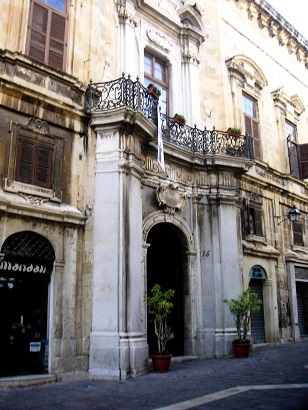
The “Great Prison,” which was located in the same building where the Order of St. John had once housed its slaves, held the majority of prisoners. This block was situated just across the street from the Lower Barrakka Gardens. It accommodated all male convicts, including debtors, who were housed separately in the upper apartments of the same building. Five days after his appointment, Ponsonby rectified the law on debtors by minimizing their confinement to a maximum of two years.
The third prison was for female convicts. On March 13, 1829, this was shifted to the Ospizio in Floriana, which overlooked Marsamxett Harbour and was adjacent to the already existing House of Industry.
On numerous occasions, Ponsonby made changes to the legal, judicial, and punitive systems. On February 7, 1828, he published a proclamation in which he expressed his desire for ‘the more effectual punishment and reformation of juvenile offenders’. Although no details were given on how this reform would be implemented, such a statement suggests that, at the time, the imprisonment of juveniles was intended not only as a deterrent from crime but also as a means to provide young offenders with an opportunity for rehabilitation.
Health Issues
Health issues and public cleanliness were also of grave concern to the authorities. Various measures were regularly taken to prevent outbreaks of epidemics. Furthermore, instructions for the police regarding the better observance of cleanliness in the streets of Valletta were issued in 1832.
Each year during Ponsonby’s tenure, a government notice was issued in either June or July, ordering that all dogs be kept indoors “to avoid the excessive heat.” While this regulation might seem to be a humane measure to protect dogs from the discomfort of summer temperatures, the notice continued with a stern warning that stray dogs would be picked up and destroyed. This implies that health authorities were taking precautions against the transmission of diseases to humans, such as rabies.

In the early months of 1830, Malta was afflicted by an outbreak of smallpox. On March 30, the government issued a notice offering free smallpox vaccinations. Apparently, this offer was not widely accepted, as another notice was published on June 23 stating, ‘The Lieutenant Governor has learned with regret and surprise that many adults and others of a more advanced age, failing in the duty they owe to themselves and to their families and to the public, hesitate to avail themselves of the protection afforded by vaccination against the Small Pox which now unfortunately prevails on these islands’.
Quarantine regulations to boatmen
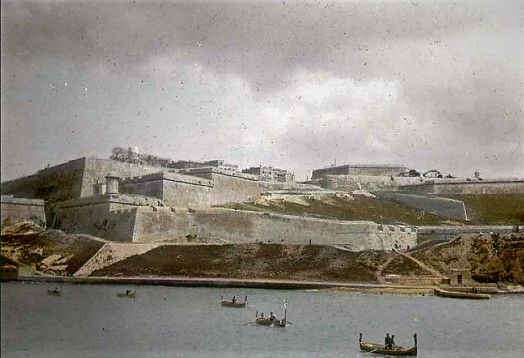
To eliminate the risk of any contagious epidemic reaching Malta, great care was taken to enforce quarantine regulations. The port of Marsamxett, which was then used exclusively as a Quarantine Harbour, was therefore specially guarded to serve as the ultimate buffer zone against such maladies.
Among numerous and frequent proclamations related to the upkeep of regulations, on June 15, 1830, boatmen in Quarantine Harbour were issued a proclamation that included the mandatory licensing of all boats operating there. The boatmen had to be registered with the Superintendence of Quarantine. When operating in Quarantine Harbour was every boat was required to carry a “Health Guardian” whose wages were included in the boat hire rate.
This and numerous other proclamations, minutes, and government notices, as from 1830, translated into Italian, were published through the office of the Chief Secretary of Government, Sir Frederick Hankey. When the latter was indisposed, the publications were edited by the Acting Chief Secretary, William Sim.
Governor Ponsonby served his term in Malta up until May 1835 and then, due to ill health, left for England. However, he remained de jure Governor until September 30, 1836. He died on January 11, 1837.
He was succeeded by Major General Sir Henry Frederick Bouverie who was appointed on October 1 1836. This time, the new governor was titled as Governor and Commander in Chief.
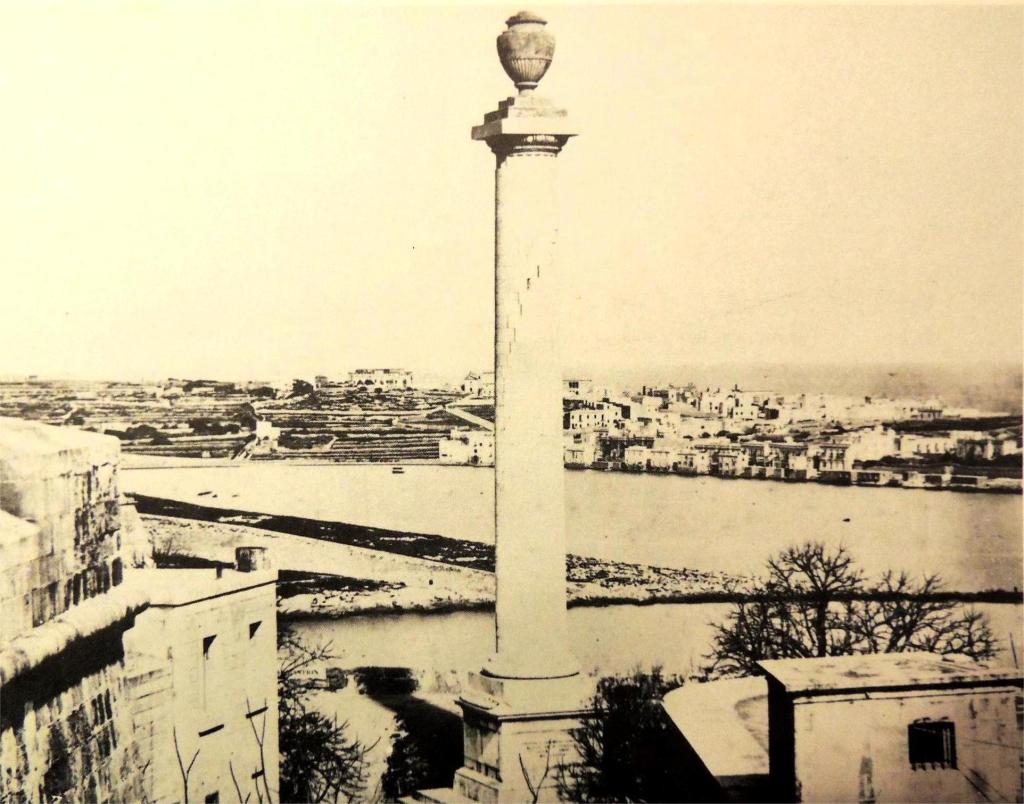
A monument, Ponsonby’s Column, was erected in Valletta in his honor in 1838 by public subscription, demonstrating the high regard in which he was held by the Maltese people. Sadly, the column was destroyed by lightning in 1864, but its plinth still survives near Hastings Gardens.

Martin Morana ©
August 5, 2025
Bibliography
Abela A.E., ‘The allied fleets and Malta’, The Sunday Times of Malta, October 15, 1995.
Bezzina Joseph, ‘Church and State in an Island Colony’, The British Colonial Experience 1800 – 1964. Mireva Publications, 1988.
Grima F. Joseph, ‘Proclamation of the 1835 Malta Constitution’, The Sunday Times of Malta, April 28, 2024.
Laferla A. V., British Malta Vol.1. A. C. Aquilina & Co. 1976.
Mangion Fabian, ‘Recalling a brave and sincere patriot forgotten by Malta’, The Sunday Times of Malta. March 18, 2015.
Said Edward, ‘Lost Landmarks of Malta – Ponsonby’s Column’, Architecture XV. 2018.
Spiteri Hilary, ‘Educational reforms in Malta in the late 1830s’, The Sunday Times of Malta, June 28, 2020.
Morana Martin, ‘Non Gode l’Immunità Ecclesias’. www.kliemustorja.com. 2025.
Price Charles A. Malta and the Maltese – A Study in Nineteenth Century Migration. Georgian House, Australia. 1989.
Xuereb Charles, ‘Camillo Sciberras, 19th century doyen of liberal Maltese politics’, The Sunday Times of Malta, July 31, 2022.
‘Proclamations published by the Government of Malta’, from 15th February to 31st December 1827.
‘Proclamations, minutes and other official matters’ Published by the Government of the Islands of Malta, from 1st January 1828 to December 1929 (Vol VI).
‘Proclamations, minutes and other official notices’ Published by the Government of the Islands of Malta, from 1st January 1830 to 31st December 1835 (Vol VII).
For further reading of the same author’s articles and publications, please click here:
 kliemustorja