

A * B * Ċ * C * D * E * F *
Ġ * G * GĦ * H * Ħ * I * J * K *
L * M * N * O * P * Q * R * S *
T * U * V * W * X * Ż * Z *
HEMP / CANNABIS
Its use in Malta and elsewhere throughout the centuries
Introduction
Hemp is that same plant that nowadays is notoriously known to many as Cannabis and historically known as Indian hemp. Etimologically, the word Cannabis goes back ultimately to the Persian name, kanab, which in 1728, the botanist Carl Linnaeus switched to Greek, to give this plant its scientific name. There exist mainly three types of hemp that grow in different regions of the world. These are known by their scientific name as, Cannabis sativa, Cannabis indica and Cannabis ruderalis. While the first two contain a strong quantity of tetrahydrocannabinol (THC), the C. ruderalis has a much lower THC and therefore has no psychoactive effects if its leaves or flower are consumed.
Hemp has been used all over the world for hundreds of years for innumerable purposes. It is believed that the first time this plant was used in large quantities was in China. In today’s world, thanks to a shift from criminalizing to regulating the cannabis plant, there are thousands of different products that are made partially or totally from cannabis grown for industrial purposes.
Hemp use in Malta
Hemp is a plant that grows also in a Mediterranean climate. In his book L’Histoire de Malte (1841), Dominique Miège, the French Consul to Malta quotes official publications on the Maltese flora that stated that this plant grew locally in the wild. The first settlers in Malta in prehistoric times and many others who came later from Sicily and the European mainland may have also imported the plant with them.
If hemp was indigenous to the Maltese islands then it goes to follow that it may well have been made use of by the earliest settlers who inhabited Malta as far back as 7,000 years ago. Surely the builders who erected the megalithic temples of Malta some 5,500 years ago must have made use of the hemp plant in order to manufacture ropes by which the megalithic stones were hauled all the way from their quarries to where they stand today.
Rope Making during the time of the Order of St John

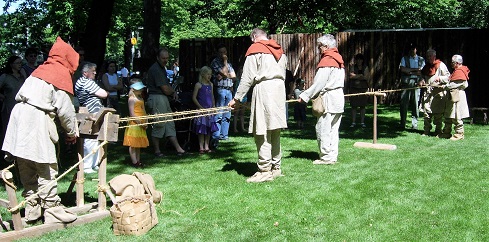
In later centuries, hemp continued to be of staple use for various purposes. Documents from the Order of St John (1530 – 1798) show that hemp was used profusely, not least to rig the Order’s maritime assets. The Order imported hemp in large quantities, mainly from Venice. The Venetians in their turn used to purchase the material from different places in Italy, such as, Ferrara, Bologna and Ancona, but they also imported hemp from Ukraine as well as from Latvia and then merchandise it in other countries such as Malta (J. Muscat, 2000).
The galleys of the Order of St John needed to have their ropes replaced by new ones from time to time, as it was imperative to rely on the efficacy of good quality rope. (J. Muscat 2000). It is estimated that in order to make a rope of 120 qama in length, 180 qama of hemp were required. (One qama is a Maltese measurement, equivalent to the width crossing from the tip of one hand, across the shoulders to the end of the other outstretched hand.
The historian Godfrey Wettinger specifies that hemp was also manufactured into fabric, both for clothing as well as for tents and awnings. Wettinger mentions a certain Vincenzo Gellel who used to employ many slaves to manufacture such materials. For every ‘quintale’ (?100 kgs) of pure hemp (that is, hemp that was not yet carded, Gellel was paid 3 tari. When carded, hemp was then manufactured into cloth at Gellel’s factory (G. Wettinger, 2002).
Nowhere so far have I encountered any documentation whereby in Malta, hemp was ever used for recreational or medical reasons.
The British Period
Dominique Miège, already quoted above, does not say whether the plant was cultivated by the local farmers. Instead, he quotes contemporary official sources that stated that hemp was imported in great quantities, for the production of rope. He claims that as much as 1,000 tons of rope were manufactured each year (Miège, 1841). One must bear in mind that this was a time when the majority of maritime travel was still carried out by sailing ships, because steam ships were still in a minority.
Other documents confirm, some ten years later, that in Birgu there were as many as 104 rope makers, and 41 in Senglea, while in Bormla there were 19, all doing their utmost to supply the British fleet according to requirement (D. Fenech, 1993). Besides these, some rope-makers in Valletta were leased one of the long halls of the former Sacra Infermeria, (the old hospital of the Order), as this building at the time was only partially used as a hospital and the long corridors afforded ample space for craftsmen to spin hemp fibre into rope ( J. H. Hennen, 1830).

The use of hemp for industrial purposes today
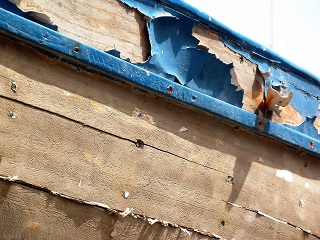
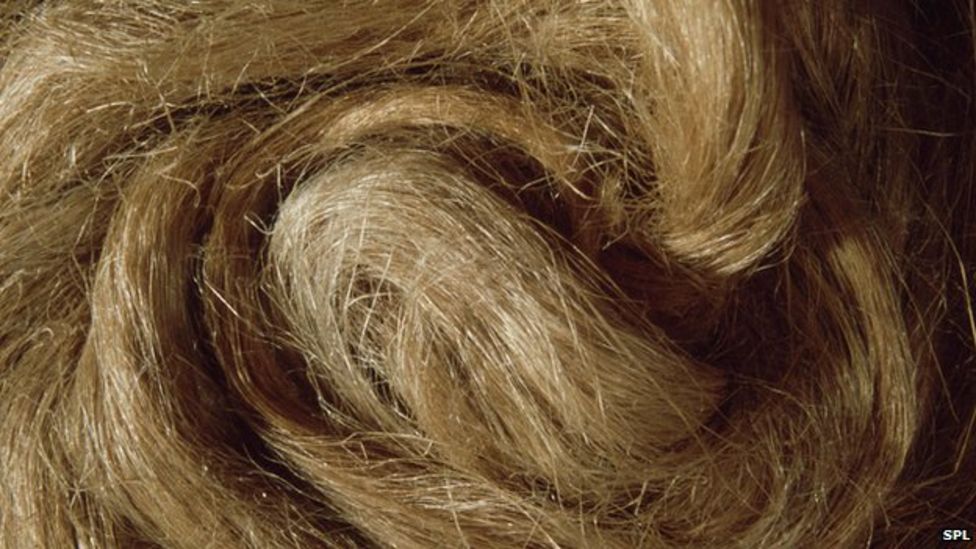
In today’s world, hemp for rope-making has diminished tremendously as this is vastly being replaced by other material such as nylon. Up to some generations ago, sacks made of hemp cloth were used when exporting or importing all sorts of material, such as potatoes, etc. Today sacks are made of other material. Nevertheless, locally, the use of hemp has survived locally to a small degree in various ways. When caulking the seams between wooden planks on the hulls of boats, hemp, cotton and/ or animal hair are used. The fibre is pressed into the seams between the boards and then a coating of tar is applied so that all is well sealed and waterproof.
Yet another use for hemp, albeit also in gradual abatement, is in the fitting of domestic water pipes. Although in the main, plumbers nowadays make use of light and soft plastic tape, many still prefer to make use of hemp strands especially if the screwed joints are made of metal, because some maintain that hemp serves the purpose better and lasts longer.
Hemp Seeds
In the Maltese language, hemp seed is known as qannebusa – obviously the word derives from qanneb. The seed is purchased to feed birds in captivity. Some bird lovers serve it to greenfinches (Maltese vrieden, plural of verdun), as it has been observed that when fed in small quantity, the greenfinch will sing more intensely. This results from the effect on the bird by a healthy content of omega 3/6 fatty acids, vitamins, minerals and all 20 known amino acids.

In his book, Description of Malta and Gozo (1838), George Percy Badger cites a humorous verse that was apparently taken from a long standing traditional rhyme, that recounts the obligations that the spouse was bound to uphold when marrying his bride. In the verse there is a line that says that the Maltese nougat so popularly sold at feasts included in it seeds of hemp:
Fl-iskrittura matrimonjali In the wedding contract
Jagħmlu l-attijiet konjugali They bind each other by conjugal agree-
ments whereby
Li jeħodha fil-festi prinċipali The groom promises to take the bride to all principal feasts
Jonsobha fuq il-ħajt Sets her comfortably upon a field wall
Jixtrilha xriek qubbajt Buys her a nougat log
Li jkun tal-qannebusa The type that contains hemp seed
Għax minnu tiggosta s-sinjura l-għarusa Because that is what the bride likes most
Hemp / Qanneb in the Maltese language
The word hemp (Maltese: qanneb) is the plural of qanba (derived from the Arabic, but ultimately from the Persian kanab). The Gozitan scholar, Gianfrangesku Agius de Soldanis, (1712-1770) in his dictionary Damma etc., translates the word qanneb in Italian as cannabo and barbella, and in Latin, cannabis. Together with this translation he also adds a phrase in Maltese, ‘[…] endauar el kanneb […]’ which he translates into Italian as scarrucolare. This Italian verb refers to the spinning by which hemp is processed into rope.
There is also a Maltese proverb that says: ‘‘Fejn bidt mur kul il-qanneb’ (Erin Serracino Inglott) – ‘go and eat hemp wherever you were staying’ – meaning: just get back to where you belong and do not bother me with your personal wrong doings.
One also comes across an ancient idiom that mentions hemp: ‘jagħmlulu l-ġbara tal-qanneb’, ‘they shall make him a poultice made of hemp’. The poultice is an euphemism referring to a hangman’s noose. Thus the proverb actually refers to the fateful outcome of someone who has committed a crime and is sentenced to death by hanging. (Source: J.A., Maltese English Dictionary, 1989).
Martin Morana
18.10.2023
The Cannabis sativa plant
by Karen Mamo MSc., Conflict Resolution Mediterranean Security, MSc Addiction Studies
Cannabis or Cannabis Sativa L. is a plant that many use it for recreational purposes. It is divide into two categories, Cannabis Sativa and Cannabis Indica. Throughout the years, there has been an increase in the different cannabis strains cultivated, including cross-breeding techniques between sativa and indica plants. A more useful approach to measure the potency or psychoactive effects of cannabis is by checking if the plant is THC dominant, therefore producing the psychoactive effects, or Cannabidiol (CBD) dominant, having no psychoactive effects.
Cannabis with low levels of THC (below 0.2%) is most commonly called hemp or Cannabidiol (CBD). The latter does not produce any significant psychoactive effects and nowadays is used not only for medicinal purposes, but also as a wellness product and for industrial use. For instance, in Morocco, a house built of hempcrete is breaking frontiers in the world of sustainable environmental construction and living. One has to be careful not to confuse phytocannabinoids occurring naturally in the cannabis plant such as Cannabidiol (CBD), with semi-synthetic and synthetic cannabinoids, such as HHC, and presently invading the local and European markets. These lab-made cannabinoids have not been tested for safety and one should be wary from using similar products.

It is interesting to note that in many countries various terms are used to refer to cannabis. This is sometimes due to social, historical and legal reasons. Interestingly, the popular word Marijuana was adopted in the USA as a means to target ‘foreign’ workers perceived as a threat to ‘white American values and family life’, particularly miscegenation (mixed race relationships and marriage). In fact, the US Federal Bureau of Narcotics (FBN), established in 1930 and headed by Commissioner of Narcotics, Harry J. Anslinger until 1962, spread racist ideas, and misinformation about the effects of cannabis use and people who use it. In various official public hearings, Aslinger repeated that:
‘Most marijuana smokers are Negroes, Hispanics, jazz musicians, and entertainers. Their satanic music is driven by marijuana, and marijuana smoking by white women makes them want to seek sexual relations with Negroes, entertainers, and others. It is a drug that causes insanity, criminality, and death– the most violence-causing drug in the history of mankind’.
Nowadays, one may mention myriads of names used to describe the plant. Interestingly, in Jamaica, the word for cannabis is Ganja, which is actually an ancient Hindu term meaning a powerful preparation of the drug. The term was referred to in Europe since 1856, even though the drug was introduced in Jamaica as early as 1845. Another term for cannabis is Dagga a term predominantly used in South Africa. The name originates from an old Khoi word dacha which was originally the name Rooi dagga, Wilde dagga or Klipdagga (Leonotis leonurus), a plant which produces a mild mental euphoric state, smoked by the Khoikhoi tribe of South West Africa in the same way as tobacco¹.
¹https://fieldsofgreenforall.org.za/the-word-dagga/
Bibliography
- Agius Sultana Gianfrangesku, Damma Tal Kliem Kartaginis u mscerred fel Fom tal Maltin u Ghaucin. (1750-1767) [Pubblikazzjoni konġunta bejn diversi istituzzjonijiet]. Editriċi, Rosabelle Carabott. 2016.
- Aquilina Joseph, Maltese – English Dictionary, Midsea Publications.
- Badger George Percy, Description of Malta and Gozo. M. Wiess, Malta. 1838.
- Caruana Joseph, Termini Nawtiċi – u Tagħrif Marittimu Lokali. BDL Publishing. 2019.
- Fenech Conrad, Dun Feliċ Demarco u l-Qarċilla fil-Karnival tal-1760. Horizons. 2013.
- Fenech Dominic, ‘Birgu During the British Period’, Birgu – a Maritime City Vol I. Malta University Services Ltd. 1993.
- Galea Ġużè, Xogħol u Snajja’ ta’ L-Imgħoddi. A.C. Aquilina. 1972.
- Hennen John. H., Sketches of the Medical Topography of the Mediterranean. Thomas and George Underwood, London. 1830.
- Miège Dominique, L’Histoire de Malte. Brusselle. 1841.
- Manduca J.S. & Ġ. Chircop, Il-Qawl Iqul. Publishers Enterprises Group, 1989.
- Muscat Joseph, Il-Flotta tal-Ordni. PIN. 2000.
- Serracino Inglott Erin, Il-Miklem Malti, Klabb Kotba Maltin.
- Wettinger Godrfrey, Slavery in the Islands of Malta and Gozo (c.1000 – 1802). PEG. 2002.
- Video showing a rope maker (not in Malta) manufacturing a rope made out of hemp.
- Benet Sula, ‘Early Diffusion and folk uses of hemp’. PDF file.1975.
 kliemustorja