
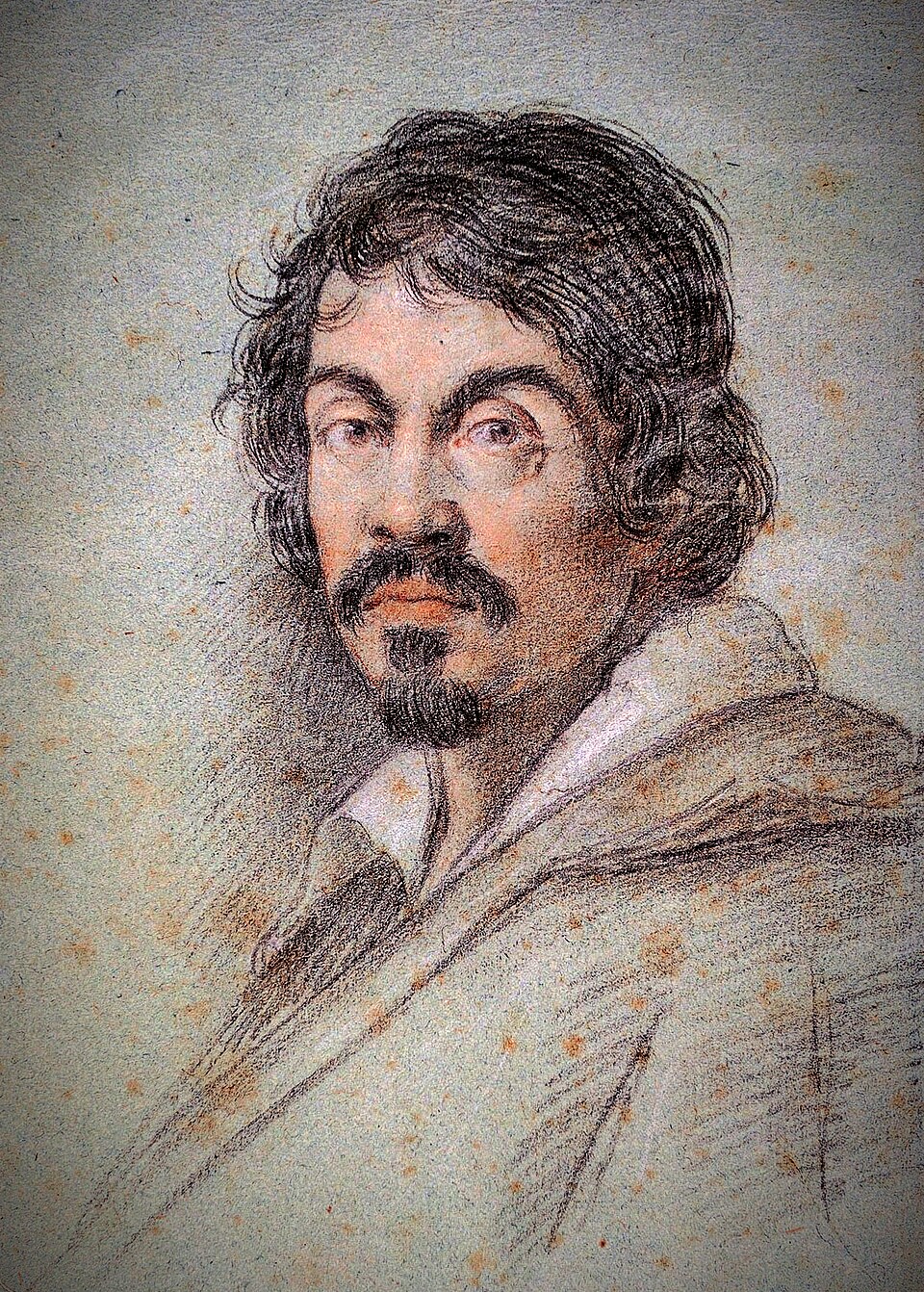
CARAVAGGIO’s SOJOURN in Malta
(An essay that includes author’s personal views)
Introduction
In May 1606, Michelangelo Merisi da Caravaggio, then 34 years old, killed a man with a sword during a fight over a wager placed on a tennis match. Facing a murder charge and a death sentence, he fled Rome and eventually sought refuge in Naples. From there, he embarked on a galley bound for Malta. The Italian artist arrived in Malta on July 12, 1607. There, he sought protection within the Order of St. John—then the multinational elite that governed the archipelago—hoping to eventually secure a papal pardon. Grand Master Alof de Wignacourt welcomed the celebrated artist and wished to appoint him the de facto court painter for the Order.
During his 15-month stay, Caravaggio created some of his greatest masterpieces, including the famous Beheading of Saint John the Baptist and Saint Jerome Writing (or Saint Jerome Contemplating). He also painted another Saint Jerome, which remained in the Grand Master’s Palace until 1672. Apart from these, he painted several portraits of Grand Master Alof de Wignacourt, one of which is presently in the Louvre Museum. He also created a tenebrist Sleeping Cupid (today in the Galleria Palatina in Palazzo Pitti, Florence) and a half-figure of the Magdalene, which is at present untraceable.
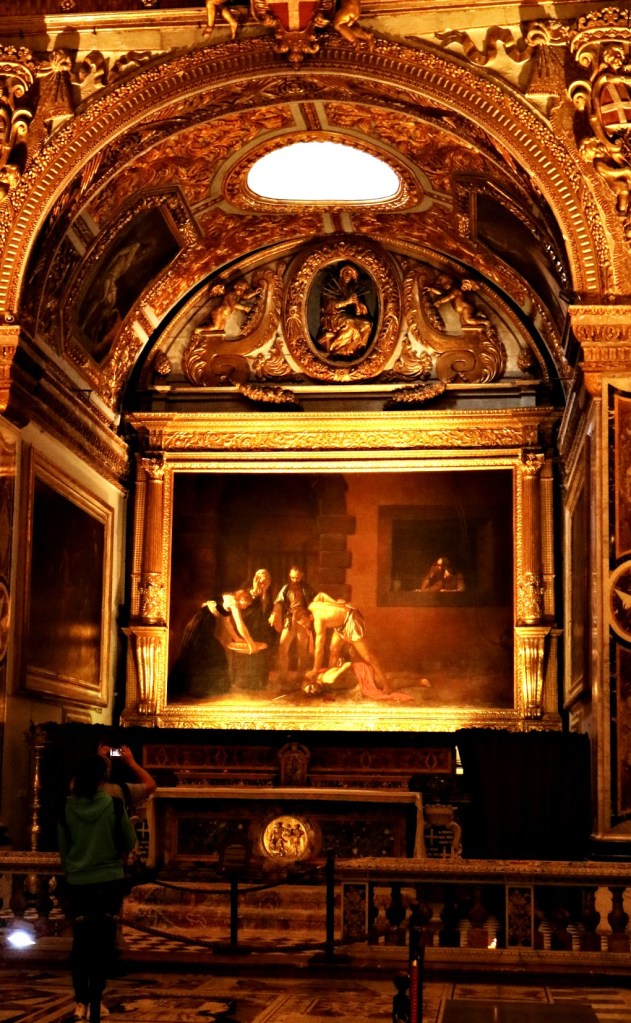
The Beheading of Saint John the Baptist
This is the largest painting Caravaggio ever made, measuring 3.61 meters in height and 5.20 meters in width. It must have been executed on-site, with the canvas hanging behind the altar of the Oratory. The painting depicts the grim execution of St. John the Baptist inside a prison courtyard. The composition includes several figures, most notably the executioner, who stands above the prostrate body of St. John, drawing a dagger to finish severing the saint’s head. Salome, Herod Antipas’s stepdaughter, stands on the far left of the painting, eagerly waiting for the executioner to place the Baptist’s head on the golden charger she holds in her hands. The prison gaoler and an old woman stand between her and the executioner. The former is pointing with his finger as to where the head of saint John should be deposited. While the gaoler looks on passively at the decapitation, the old woman next to him is the only person in the group who seems visibly upset, her hands drawn to her face as she grimaces at the final, horrendous act of martyrdom. This female figure may well be the gaoler’s wife, which can be deduced from the fact that, until recent times, it was customary for a prison’s head warden to reside with his family within the same precinct.
The painting exemplifies the chiaroscuro technique that Caravaggio had pioneered by then—a dramatic, theatrical contrast between deep shadow and intense light focused on the main characters. Incorporated within this style is what is known as the luce di cantina (cellar light) technique, whereby the light illuminating the figures is sourced from a single direction, in this case from above. Caravaggio must have been inspired by light entering the Oratory hall through the lantern windows located above the altar. The protective covering that is now in place to shield the painting from sunlight was not there when Caravaggio painted The Beheading, thus providing adequate natural light for the artist to work in.
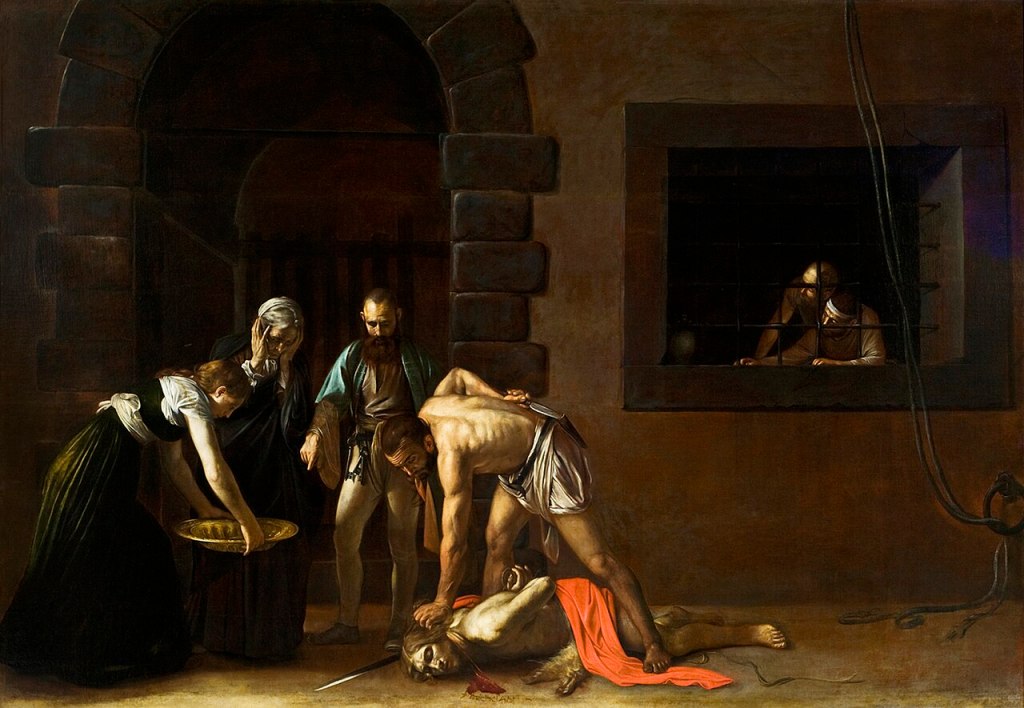
The figures in the tableau are anything but centred. All the characters are huddled together on the left-hand side of the canvas, while the rest of the space is left devoid—or almost so, as two figures are seen lurking in the background, looking out onto the courtyard from behind a barred window. By positioning these two onlookers there, Caravaggio creates a three-dimensional effect that enhances the depth between the walls and the foreground of the painting. Interestingly, Caravaggio paints a rope (actually, there are two showing) hanging down on the right hand side of the painting, as if to hint that it was part of a torture contraption used on the saint prior to his death. The saint had apparently been subjected to torture by strappado, a method known to have been practiced in Malta at the time by the Inquisition. In this process, the victim is tied to a rope with their hands behind their back and lifted off the floor, wrenching the arms backward and placing the body’s entire weight onto the shoulders to inflict severe pain.
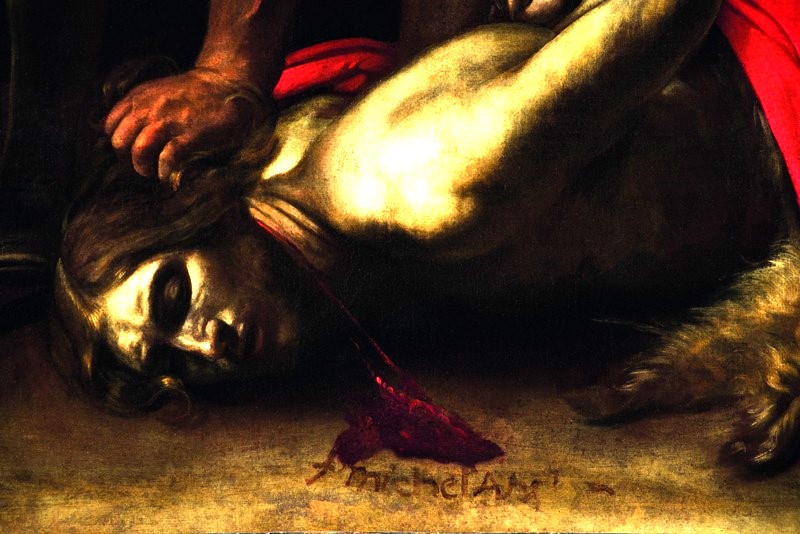
The Beheading is the only painting that Caravaggio ever signed. The signature was discovered during restoration and is rendered in red, matching the blood oozing from the martyr’s neck. Interestingly, he signed himself as f. Michel An… The letter f most likely stands for Fra (meaning “brother”), indicating that by the time the painting was finished, he had been accepted as a Knight of Obedience within the Order of St. John.
This painting is arguably Caravaggio’s highest achievement. The renowned art historian Roberto Longhi famously declared that this work could be considered “the painting of the century.”
Saint Jerome Contemplating
In this painting, created during his stay in Malta, Caravaggio portrays this early Doctor of the Church in deep contemplation. Saint Jerome is shown with a bare torso and a red cloak covering his lower body. Incidentally, it is worth noting that Saint John the Baptist is similarly covered by a bright red cloth, as if red symbolizes a higher rank in the hierarchical classification of Christian hagiography—though in Saint Jerome’s case, the colour also alludes to his traditional anachronistic association with the rank of cardinal. Saint Jerome is seated at a desk with a quill in hand, seemingly contemplating the afterlife, as symbolized by the skull at the other end of the table. A stone placed close to the skull denotes the saint’s ascetic life (c. 342–420 AD), referring to his penance in the desert. The quill suggests that Saint Jerome is writing down one of the theological teachings that would profoundly influence Christian doctrine; he is best known for translating the Bible from Hebrew and Greek into Latin (the Vulgate).
The painting was originally commissioned and owned by the Prior of Naples, Fra Ippolito Malaspina—the same knight who accompanied Caravaggio on his voyage from Naples to Malta. Prior to his death, Malaspina bequeathed the painting to the Order so that it would hang in the Chapel of Italy within the same conventual church (St. John’s Co-Cathedral).
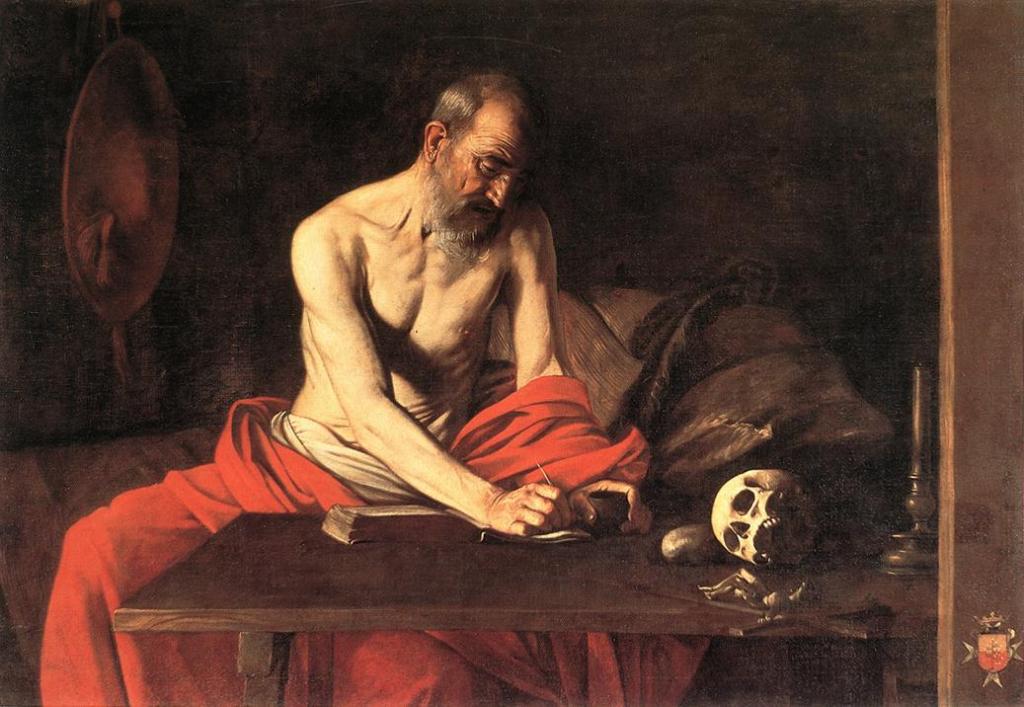
In this picture, Caravaggio again employs the chiaroscuro technique, painting directly from a live model. Some scholars have suggested that the model was none other than Grand Master Wignacourt, who had already sat for his own portraits. While possible, the saint’s face in this painting appears noticeably older than in the Wignacourt portraits painted during Caravaggio’s stay in Malta, when the Grand Master was 60 years old. Moreover, the weather-beaten features and tanned skin of the face and hands—which contrast sharply with the pale torso—suggest that the model was someone who spent most of his days working outdoors, regularly exposed to the harsh Mediterranean sun. One can easily imagine that the model was a local Maltese man whom Caravaggio plucked off the street to sit for him; after all, in Italy, the artist was notorious for recruiting prostitutes and everyday street people to model for his sacred works.
Caravaggio’s revolutionary artistic style
Caravaggio rejected the idealizing principles of the Renaissance. He abandoned the convention of painting his subjects—often saints—as pious, pure souls endowed with the bodies of Greek demigods. Instead, he used ordinary people as models; those who sat for him included boys dressed as pagan gods and male figures portrayed with dirty fingernails, calloused feet, and sunburned skin. This approach grounded his sacred subjects in earthly humanity. He invented tragic realism, and his work served as the great hinge upon which art turned toward the Baroque. The force and immediacy that make 17th-century painters so moving—the everyday people in Velázquez and Rembrandt, the strobe-lit dramas in Ribera and Georges de La Tour—flow in part from the innovations Caravaggio placed before them.
Caravaggio’s Stay in Malta and His Escape
In July 1608, Caravaggio was invested as a Knight of Obedience within the Order—an unusual feat for a wanted man, made possible through papal dispensation and the Grand Master’s admiration for Caravaggio’s artistic abilities. Yet Caravaggio’s volatile temperament soon caught up with him: just weeks after he was knighted, in August 1608, he was involved in a violent brawl that left another knight seriously wounded. He was arrested and imprisoned inside Fort St. Angelo in Birgu.
Some two months later, in early October, Caravaggio escaped from the fortress and fled to Sicily. After nearly two years of wandering—from Syracuse to Messina, and then to Palermo —he embarked on a vessel that took him up the Italian coast. In July 1610, he arrived in Porto Ercole, in Tuscany, where he lingered while awaiting the Pope’s pardon. There he died, likely of a fever caused by sepsis or typhus. Although the papal pardon he had sought for years was finally granted, he did not live to hear the news.
Meanwhile, in December 1608, the Order held a trial in which Caravaggio was formally stripped of his knighthood and expelled in absentia as a “foul and rotten member.” Ironically, the ceremony took place inside the very same Oratory where Caravaggio’s Beheading hung on display.
Timeline of Caravaggio’s Maltese journey and sojourn
- 28 May 1606: Caravaggio murdered Ranuccio Tomassoni. He subsequently fled Rome, was placed on trial in absentia, and was sentenced to death.
- 12 July 1607: Caravaggio arrived in Malta.
- 15 February 1608: Following Grand Master Alof de Wignacourt’s plea to Pope Paul V for permission to appoint Caravaggio as a Knight of Obedience, the Pope consented.
- 14 July 1608: Caravaggio was accepted into the Order as a Knight of Obedience.
- 18/19 August 1608: Caravaggio participated with four others in assaulting the house of Fra Prospero Coppini. In the brawl that ensued, Fra Giovanni Rodomonte Roero suffered a gunshot wound. Those involved were arrested, and Caravaggio was sent to Fort St. Angelo to be imprisoned in a guva (bell-shaped dungeon).
- Early October 1608: Caravaggio managed to escape from the fort and fled to Sicily.
- 1 December 1608: Caravaggio was formally expelled from the Order in absentia.
- 18 July 1610: Caravaggio passed away.
Martin Morana
17.November 2026
Bibliography
Bonello Giovanni, ‘Caravaggio Duo: A very personal Assessment’, Histories of Malta, Mysteries and Myths. Fondazzjoni Patrimonju Malti. 2007.
Bottari Stefano, Caravaggio – The Life and work of the artist illustrated.
Dolphin Art Book – Thames and Hudson. 1971.
Buhagiar Mario, The Iconography of the Maltese Islands 1400 – 1800 – Painting.
World Confederation of Salesian Past Pupils of Don Bosco – Lions Club (Malta). 1988.
Cassar Paul, ’Michelangelo Merisi Da Caravaggio – The Creative Psychopath’, Melita Historica, Vol. 10 no. 2.
Debono Sandro, Understanding Caravaggio and his Art in Malta. Insight Heritage Guide, Heritage Books. 2007.
Degiorgio Cynthia & Sciberras Keith, Caravaggio And Paintings of the Realism in Malta – Abridged Catalogue. Midsea Books. 2007.
Farrugia Randon Philip, ‘Beheading misplaced? Or misplaced arguments?’ The Times, July 2, 1999.
Farrugia Randon Philip, ‘Caravaggio in Malta – A new Document. The Sunday Times of Malta, May 15, 1994.
Farrugia Randon Philip, ‘Michelangelo Merisi da Caravaggio – s life and works. The Times, June 6, 1997.
Grima Joseph F., ‘Caravaggio in Malta. Malta Economic Update. April 1995.
Mangion Tony, ‘Caravaggio in Malta’, Heritage Encyclopedia, Vol 3.
Von Sandart Joachim, ‘Caravaggio and early 17th century Malta’. The Times, Saturday, September 16, 2007.

