
Aktar artikli mill-istess awtur … https://kliemustorja.com/
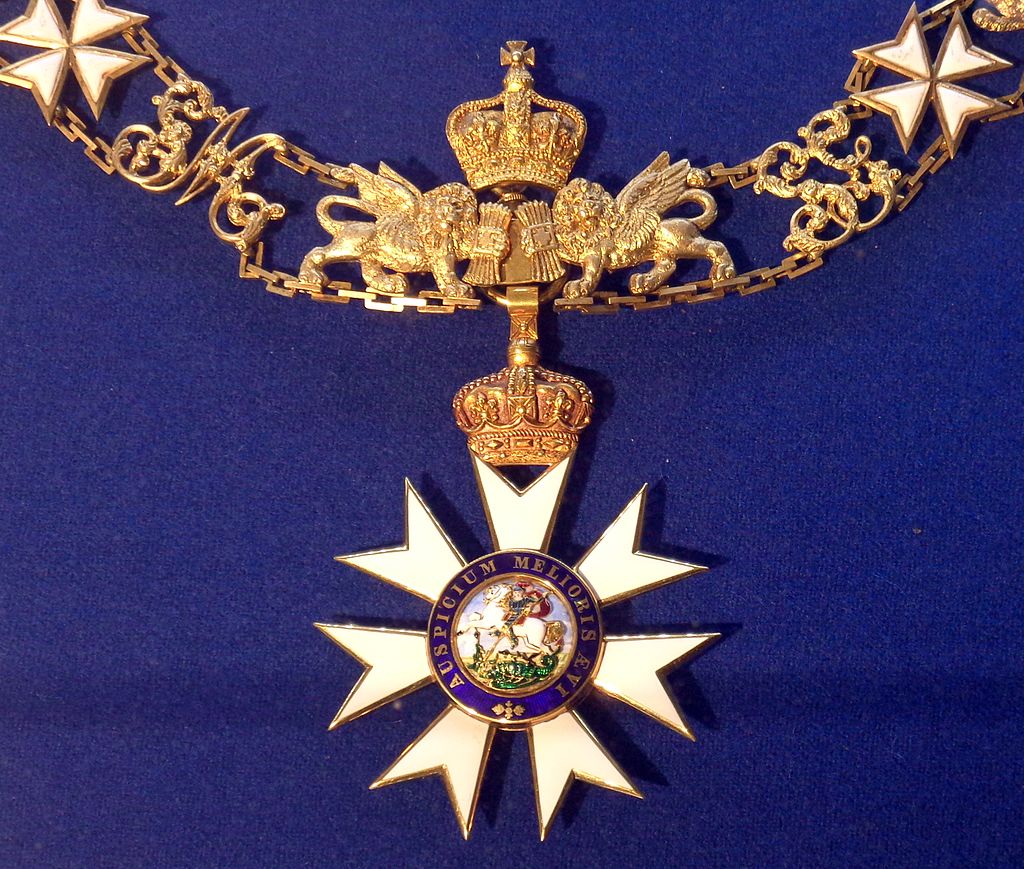 1818 December 16 The first investiture into the newly established Order of Merit set up by the British Monarchy in April 1818, took place inside the Governor’s Palace in Valletta. The scope of the new Order was to honour British citizens who carried out exceptional service in the Mediterranean, such as in Malta or the Ionian Islands, then under British rule, in their line of duty to the good of the British Empire. The Order was to accept knights in various categories: Eight of them, as Knights Grand Cross, (GCMG); twelve Knights Commander (KCMG) and twenty four Knight Companion (CMG). The order was headed by an appointed Grand Master, this at the time being the first Governor of Malta, Sir Thomas Maitland. Following this initial investiture, the Grand Council Chamber inside Governor’s Palace became known as the Hall of St Michael and St George. Amongst the Maltese who were knighted in later years there were: Sir Adrian Dingli, Advocate of the Crown, who worked assiduously with the British governors during their tenure to design various constitutions and enact laws of great importance. There was also Vincent Casolani, (1785 – 1855), Treasurer of the Financial Administration of Government. In the 20th century, Themistocle Zammit was also knighted as KCMG in recognition of his pioneering work in identifying the original source of transmission of the microbe Brucellosis that was the cause of Undulant Fever in both Maltese and British soldiers stationed here.
1887 December
The British government conceded a more liberal constitution to the Maltese representatives in the Governor’s Coundil. With the new Constitution, the Council of Government was now made up of six officials appointed by the Governor, who, himself presided the Council and ten who were elected by popular vote. Four candidates were to be selected from particular classes of Maltese society, namely, the Nobility, the business community and the clergy. Thus, for the first time, there was a majority of members that were democratically elected by the Maltese. The new Council counted 20 members in all.
 1908 December 28 At around 5.20 am a powerful earthquake shook Messina and the neighbouring Sicilian and Italian provinces to their core. At its epicentre the earthquake measured to the equivalent of 7.1 on the Richter scale. In Malta eight shock waves were felt in the span of about an hour and 20 minutes. At around 8 am there ensued a minor tsunami around the Maltese coast as the sea became more and more agitated. While the Grand Harbour was the least affected, in Msida, the sea rushed into the innermost part of the creek to reach and enter houses of residents living close to the shore. This phenomenon continued throughout the day and abated only around 4pm. Luckily no one was killed or injured. Not so in Messina and Reggio Calabria, where it is estimated more than 100,000 lost their lives and most buildings in both towns were razed to the ground. It was only in the evening that news reached Malta by telegraph that reported the devastation that had ensued in the neighbouring Italian regions. The British military base in Malta immediately mobilised its naval assets to quickly go to the aid of the surviving victims and provide medicinal supplies, tents, clothing and other provisions required. Maltese and British doctors and nurses also travelled to Sicily on the same ships. To the Archbishop’s call, the Maltese clergy offered their assistance en mass to assist the survivors by travelling to Messina once called and provide spiritual comfort. (Most of this information was gleaned from, ‘Earthquake and People: The Maltese Experience of the 1908 Messina Earthquake’ by Ruben Paul Borg, Sebastiano D’Amico and Pauline Galea).
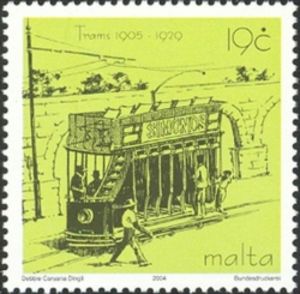 1929 December 16 The tram service wrapped up its operations. In the last three years MaCartney & McElroy, the company in charge of operations had made losses of up to 40,000 pounds. The tram service had been in operation since 1903, providing a limited range of communication to the outskirts of the Harbour area. The service was constantly encountering both established and new competitors. The train service was still in operation. Then there were the ferry boats, and the dgħajsa tal-pass both operating between the harbour towns. These, not to mention that some 1,400 motor cars had been imported by the mid-1920’s. The most formidable competitor were however, the recently imported buses (the omnibus or nimnibus as they were known). With their widely extended routes the death knell of the tram service was sounded as passengers dwindled. (Most of the information was gleaned from, A Chronicle of Twentieth Century Malta, 2004, by Joseph Bonnici and Michael Cassar).

1955 – 1958 December On being elected to government the Labour Party initiated a flurry of lobbying with British MPs to get discussions started on the possibility of Malta joining the United Kingdom. On December 22, 1955, the Labour Party passed a Referendum Bill for Integration with Britain. As one may well imagine talks were very complex and never ending as numerous aspects of this proposal were proving difficult agree to. Mintoff’s main intentions were to enhance Malta’s standard of living and ultimately desired that Malta would terminate its colonial status. This proposal found great opposition from the rest of Malta’s political arena, including the Constitutional Party, which in spite of its sympathetic leanings towards anything British, had long dropped its aspirations to have Malta join Britain. The Maltese Church had its misgivings too, believing that the laws of Britain, such as those concerning divorce, were a threat to the religious beliefs and way of life of the Maltese. A referendum was held – 45 per cent went to the polls resulting in a 75% YES votes in favour of integration. By November of 1958 talks faltered and ground to a halt. Both Britain and Malta came to realise that the integration plans were full of pitfalls and the final goals aimed at by both sides were not do-able. Mintoff then took a completely different tack and on December 30, 1958 declared his ‘Break with Britain’ resolution. In other words, Mintoff had now made a complete u turn and abandoned any plans of integration. As from now on, he was now intent on achieving a Self-determination status for Malta and ultimately, independence from Great Britain. Independence was indeed achieved in 1964, albeit by a successively elected Government, following another referendum. (Most of the information was gleaned from A Chronicle of Twentieth Century Malta, 2004, by Joseph Bonnici and Michael Cassar.
Aktar artikli mill-istess awtur … https://kliemustorja.com/
1964 Following independence from Britain on September 21, Malta applied to become member of the United Nations. This request was accepted on December 2 of the same year.
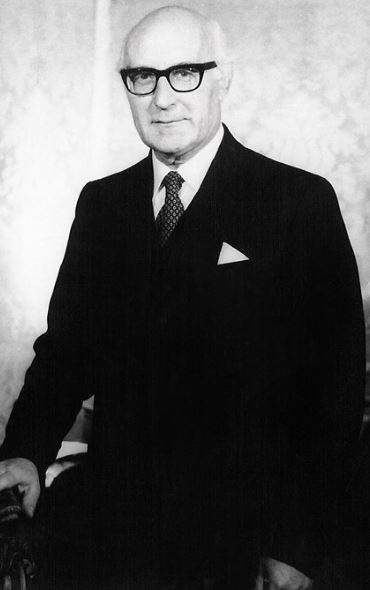 1974 December 13, Ten years later, Parliament voted with an overwhelming majority in favour for changes in the Independence Constitution, in order for Malta to become a fully fledged Republic. Many changes were inserted into the new constitution, some of which had been the bone of contention in eaerlier years between the Labour Party and the Malta’s Church authorities. The appointment ceremony of the first President of the Republic took place on December 13 inside the Governor’s Palace, now the President’s Palace, thus ending 174 years of British monarchical connection with Malta. The first Maltese President appointed by a parliamentary vote was Sir Anthony Mamo, a former Supreme Judge and up to then the acting as Governor General on behalf of the British Monarchy. The term of office of the President is of five years.
Martin Morana
December 4, 2020
For further reading on Maltese history in English …. plse click here: https://kliemustorja.com/blog/
You may also be interested to read about a different aspect of Maltese social history … MALTESE HUMOUR … please check it out here: https://sites.google.com/view/maltesehumoursbutseriously/home
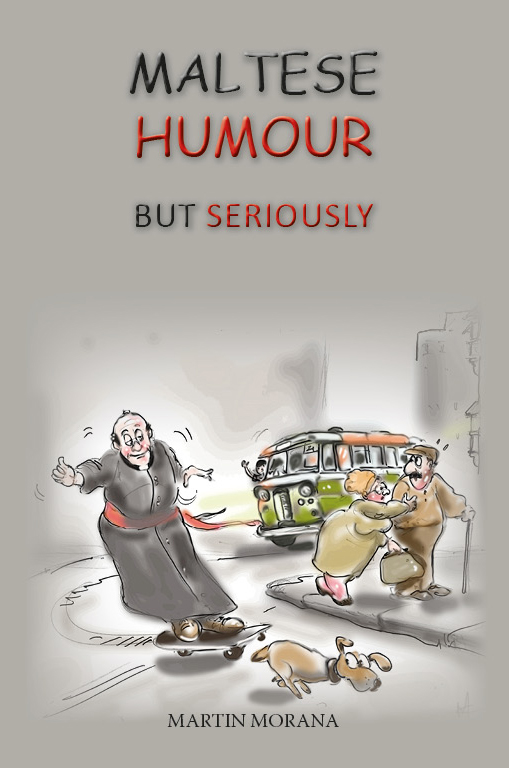
On sale: paperback 227 pages b & w. price: Euro 12.95
Now also on sale by Amazon Kindle ….$7.30
Amply illustrated.
Aktar artikli mill-istess awtur … https://kliemustorja.com/
 kliemustorja